
Honey Creek State Natural Area: Everything You Need to Know

Find a Hidden Gem in the Texas Hill Country
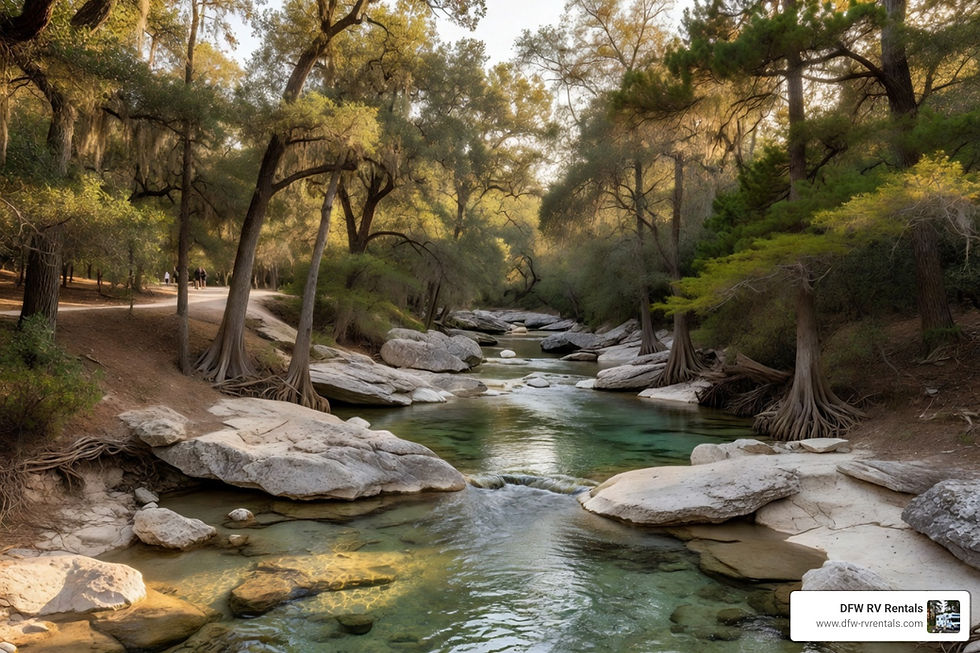
Honey Creek State Natural Area is a pristine 2,761-acre nature preserve in the Texas Hill Country, about 35 miles north of San Antonio. Unlike a typical state park, this protected area prioritizes conservation over recreation—access is by guided tour only, ensuring the fragile ecosystem remains undisturbed for future generations.
Quick Facts for Planning Your Visit:
Detail | Information |
Location | Comal County, Texas (near Spring Branch) |
Access | Guided tours only through Guadalupe River State Park |
Trail Length | 2.0-mile loop |
Difficulty | Easy (134 ft elevation gain) |
Best Time to Visit | October through February |
Cost | No fee for tour; park entry fee applies |
Pets | Not allowed |
The area features a 1.5-mile spring-fed creek winding through bald cypress trees, with Spanish moss dangling from live oaks along the trail. You'll explore diverse habitats—from upland juniper forests to canyon ecosystems—and learn about endangered species like the golden-cheeked warbler that nest here.
Tours typically last about two hours and cover two miles of terrain. You'll start at the historic Rust House (once a working ranch) and descend into a scenic canyon where Honey Creek flows crystal-clear from the Edwards Aquifer. Guides share insights about the geology, plants, and wildlife that make this one of the most ecologically significant areas in Central Texas.
I'm Jonathan Dies, owner of DFW RV Rentals, and I've helped countless families explore Texas's natural treasures, and Honey Creek State Natural Area stands out as a must-visit destination for those seeking an authentic Hill Country experience. The adjacent Guadalupe River State Park offers excellent RV camping facilities, making it easy to extend your adventure beyond the guided tour.

What is Honey Creek State Natural Area and Where is It?
If you're looking for an unspoiled piece of the Texas Hill Country, then Honey Creek State Natural Area is precisely what you're seeking. This remarkable preserve is not your average state park; it's a testament to nature's enduring beauty, managed with a primary focus on conservation.
Located in western Comal County, Texas, Honey Creek State Natural Area is nestled near the charming communities of Spring Branch and Bulverde. Its strategic position places it approximately 35 miles north of San Antonio and about 30 miles northwest of New Braunfels, making it an accessible, yet wonderfully secluded, escape. What makes it even more convenient for visitors is its adjacency to Guadalupe River State Park, which serves as the primary gateway to the natural area.

The natural area spans an impressive 2,761 acres, a substantial expanse of pristine Texas landscape. It's important to understand the distinction: Honey Creek State Natural Area is designated as a "Natural Area" rather than a "State Park." This classification means that the Texas Parks and Wildlife Department's first priority is the maintenance and preservation of the property's natural state, often leading to more stringent access policies to protect its sensitive ecosystems. This commitment ensures that when you visit, you're experiencing a landscape as close to its original condition as possible.
To pinpoint its exact location, you can use these coordinates: 29°51′48″N 98°29′24″W. These coordinates lead you to a place where the hustle and bustle of modern life melt away, replaced by the tranquil sounds of nature.
A Pristine Waterway
At the heart of Honey Creek State Natural Area lies its namesake, a beautiful 1.5-mile spring-fed creek. This waterway is a vital artery, flowing with crystal-clear water sourced from the Edwards Aquifer. The purity and consistent flow of Honey Creek are not just aesthetically pleasing; they are ecologically crucial, contributing significantly to the health of the Guadalupe River watershed.
As you walk along the creek, you'll be captivated by the majestic bald cypress trees that gracefully line its banks. These ancient giants, with their distinctive "knees" protruding from the water, create a serene, almost mystical atmosphere. The creek itself is a vibrant ecosystem, teeming with life, and its pristine condition is a testament to the dedicated conservation efforts that protect this natural treasure. It's truly a place where you can slow down and appreciate the intricate details of a healthy Texas waterway.
History and Conservation
The story of Honey Creek State Natural Area is deeply intertwined with a commitment to preserving Texas's natural heritage. The natural area was officially established in 1985, though its journey to protection began earlier. The core of the property was acquired from The Nature Conservancy in 1985, an organization dedicated to conserving the lands and waters on which all life depends. Further acquisitions, including land from a private individual in 1988, helped shape the natural area into what it is today.
Before its designation as a natural area, the land bore the marks of human history, particularly through the Rust family's ranching activities. The historic Rust House, which now serves as the starting point for guided tours, is a tangible link to this past, offering a glimpse into the lives of those who once worked this rugged terrain.
The commitment to conservation at Honey Creek continues to evolve. In recent years, the area has seen a significant expansion with the addition of 515 acres. This growth further bolsters its role as a vital natural preserve. You can read more about this exciting development here: "Honey Creek Spring Ranch Becomes Latest Conservation Achievement".
Beyond land acquisition, active management strategies are crucial for maintaining the ecological health of the natural area. One such practice is the prescribed fire program. This technique, which mimics natural fire cycles, is essential for restoring land health by suppressing invasive woody plants and promoting the growth of native grasses and diverse plant communities. It's a powerful tool that helps ensure the vibrant ecosystems of Honey Creek State Natural Area continue to thrive for generations to come.
The Unique Flora and Fauna
Honey Creek State Natural Area is a biological hotspot, boasting an incredible diversity of plant and animal life that thrives within its varied Hill Country habitats. As you descend from the uplands into the canyon and then to the creek floodplain, you'll witness distinct changes in plant life, each zone supporting its own unique community.
In the higher, drier uplands, you'll find species adapted to these conditions, such as Ashe juniper, live oak, agarita, and Texas persimmon. These hardy plants form a resilient ecosystem that provides shelter and food for many creatures. As you move closer to the creek, the environment becomes more lush. The canyon walls and creek banks support cedar elm, Spanish oak, pecan, walnut, and Mexican buckeye. In the immediate floodplain of the creek, you'll encounter magnificent sycamores and bald cypress, along with more delicate flora like Texas palmetto, columbine, and maidenhair fern. This rich botanical mix is home to more than 500 species of native plants, including 20 species of ferns, making it a true botanical marvel.

The animal life here is equally impressive. While you might spot typical Texas Hill Country animals like wild turkeys, Eastern fence lizards, armadillos, and leopard frogs, the area is also a sanctuary for more unusual and sensitive species. These include the elusive Cagle's map turtle, the vibrant Guadalupe bass (which is Texas's state fish!), the quick four-lined skink, the striking green kingfisher, and various Texas salamanders, including the rare Honey Creek Cave salamander. Over 180 species of birds have been recorded in the broader region, and many call this natural area home.
Here's a glimpse at some of the notable species you might encounter:
Notable Plant Species:
Ashe juniper
Live oak
Bald cypress
Texas palmetto
Columbine
Maidenhair fern
Agarita
Texas persimmon
Cedar elm
Spanish oak
Pecan
Walnut
Mexican buckeye
Sycamore
Notable Wildlife:
Golden-cheeked warbler (endangered)
Guadalupe bass (Texas state fish)
Cagle's map turtle
Green kingfisher
Wild turkeys
Eastern fence lizards
Armadillos
Leopard frogs
Four-lined skink
Texas salamander
Honey Creek Cave salamander
A Protected Animal Refuge
Honey Creek State Natural Area stands as a critical animal refuge, especially for species with limited ranges or those facing threats. Its designation as a Natural Area underscores its vital role in protecting sensitive ecosystems. Perhaps most notably, it provides essential nesting sites for the endangered golden-cheeked warbler. This small, migratory songbird relies on the specific Ashe juniper and oak woodlands found here for its breeding grounds, making the preservation of Honey Creek paramount to its survival.
Beyond the golden-cheeked warbler, the natural area is a haven for other rare and unique species that flourish in its protected environment. The Cagle's map turtle, a freshwater turtle found only in a few river systems in Texas, and the four-lined skink, a lizard with a distinctive striped pattern, are just a couple of examples of the specialized wildlife that call Honey Creek home. The pristine waters of Honey Creek also support a healthy population of Guadalupe bass, the state fish of Texas, which thrives in clear, flowing streams.
The unique geological features and diverse habitats—from the spring-fed creek to the upland forests—create a mosaic of microclimates and ecological niches that support this incredible biodiversity. It's a living laboratory where nature continues to unfold, protected from the impacts of unchecked development. To dig deeper into the wonders of this area's natural environment, we encourage you to explore More on the area's nature. Every visit is a chance to witness the delicate balance of life that thrives in this special corner of Texas.
Planning Your Visit to Honey Creek State Natural Area
Visiting Honey Creek State Natural Area is a truly unique experience, unlike a typical day at a state park. Due to its fragile and pristine nature, access is exclusively by guided tour. This means you won't be able to wander in on your own; a knowledgeable guide will lead you through the wonders of the natural area. This policy ensures that the sensitive ecosystems remain protected while still allowing visitors to appreciate its beauty.
Tours are led at least once a week, offering a fantastic opportunity to learn about the area's history, geology, plants, and animals from experts. The guided hike typically follows a 2.0-mile loop trail, which AllTrails users generally rate as easy. With an elevation gain of about 134 feet, it's a manageable walk for most fitness levels, taking an average of 43 minutes to complete. However, the experience is designed for observation and learning, so you'll likely spend more time soaking it all in.
During the tour, you can expect to begin at the historic Rust House, a relic of the area's ranching past. From there, you'll descend into the scenic canyon, catching glimpses of Honey Creek winding through bald cypress trees far below. The tour culminates in a peaceful walk by the pristine, spring-fed creek, offering a chance to truly connect with this unspoiled environment. Our guides are wonderful storytellers, bringing the landscape to life with fascinating facts and insights.
To join one of these enriching experiences, you'll need to plan ahead. We recommend checking the Texas Parks and Wildlife Department's events page for schedules and registration. You can Register for Honey Creek Nature Walks to secure your spot and start on this unforgettable journey.
Rules and Recommendations
To ensure everyone has a safe and enjoyable experience while preserving the natural integrity of Honey Creek State Natural Area, there are a few important rules and recommendations to keep in mind:
First and foremost, no pets are allowed on the guided tours or within the protected boundaries of the natural area. This strict policy is in place to safeguard the fragile ecosystem and protect the wildlife, especially ground-nesting birds and other sensitive species. We know it's tough to leave your furry friends behind, but their absence helps maintain the pristine condition of this special place.
Regarding costs, there is no direct entrance fee for the guided tour of Honey Creek State Natural Area itself. However, since access to Honey Creek is granted through the adjacent Guadalupe River State Park, you will need to pay the standard entry fee for the state park upon arrival. This fee helps support the maintenance and operations of both the park and the natural area.
When planning your visit, timing is everything. The best times to visit Honey Creek State Natural Area are typically October through February. During these cooler months, the weather is more pleasant for hiking, and you'll generally encounter fewer insects. Visiting during early summer can be challenging, as some visitors have noted that trails can quickly become overgrown, and you might encounter more mosquitoes and ticks. We want your experience to be as comfortable as possible, so bundling up for a winter or fall tour is often a great choice!
Speaking of weather, the Texas Hill Country experiences a range of conditions. January average temperatures hover around a pleasant 60 degrees Fahrenheit, while July can reach an average of 86 degrees Fahrenheit. The first freeze usually occurs mid-November, and the last freeze by mid-March. Always check the forecast before your visit to dress appropriately. For the most up-to-date weather information, you can Check the local forecast for the area.
Getting Involved
The preservation of places like Honey Creek State Natural Area relies heavily on the passion and dedication of individuals who care deeply about conservation. If you're inspired by what you've learned and want to contribute, there are several ways to get involved.
One of the most impactful ways is through volunteer opportunities. Volunteers are the backbone of many state parks and natural areas, assisting with crucial tasks such as wildlife surveys, which help researchers understand and monitor local populations. They also contribute to trail maintenance, ensuring that guided paths remain clear and safe, and help with various program assistance roles. These efforts directly support the ongoing health and accessibility of the natural area.
A fantastic resource for getting involved is the Friends of Guadalupe River State Park and Honey Creek State Natural Area. This dedicated group works tirelessly to support both the state park and the natural area through fundraising, volunteer recruitment, and advocacy. Becoming a member or making a donation is a direct way to contribute to their vital work in conservation and education. Every little bit helps protect these invaluable Texas landscapes.
Beyond volunteering and donations, you can also participate in various Ranger Programs offered at the adjacent Guadalupe River State Park. These programs occasionally extend to the natural area or offer insights relevant to its ecosystems. Keep an eye out for exciting opportunities like night hikes, bluebonnet walks (seasonal, of course!), and even archery clinics. These programs provide additional avenues for learning and engagement, enriching your overall experience in the Texas Hill Country.
Nearby Attractions and Accommodations
Your adventure to Honey Creek State Natural Area doesn't have to end with the guided tour! The beauty of its location is its close proximity to Guadalupe River State Park, which offers a wealth of additional activities and serves as an excellent base for your visit.
Guadalupe River State Park is a destination in itself, providing ample opportunities for:
Camping: Whether you prefer primitive sites or full RV hookups, the park offers diverse camping options. It’s perfect for extending your stay and immersing yourself in the Hill Country.
Hiking: Beyond the Honey Creek tour, the state park boasts over 13 miles of scenic trails, ranging from easy strolls along the river to more challenging climbs with rewarding views.
Swimming: The Guadalupe River is a popular spot for cooling off during warmer months. Its clear waters invite visitors for a refreshing dip.
Canoeing and Kayaking: The river's gentle currents make it ideal for paddling, offering a unique perspective of the riparian ecosystem.
For those of us who love the freedom of the open road and the comfort of home, RV camping at Guadalupe River State Park is an ideal choice. Imagine waking up to the sounds of nature, enjoying breakfast with a view, and having all the amenities you need right at your fingertips. If you're planning an extended trip or looking for the best places to park your home-on-wheels, we've got you covered. Check out our guides on Roaming the Lone Star State: Best RV Camping Spots in Texas and Embark on an Epic RV Adventure for tips and inspiration.
Beyond these two natural havens, the surrounding Texas Hill Country is dotted with charming towns, wineries, and other natural attractions. You could explore the shops in Fredericksburg, enjoy some BBQ in Lockhart, or simply take a scenic drive through the rolling hills. Combining a visit to Honey Creek State Natural Area with the recreational opportunities at Guadalupe River State Park and the wider Hill Country experience makes for an unforgettable Texas getaway.
Frequently Asked Questions about Honey Creek State Natural Area
We understand you might have more questions as you plan your visit to this unique natural treasure. Here are answers to some of the most common inquiries about Honey Creek State Natural Area:
How do I get to Honey Creek State Natural Area?
Access to Honey Creek State Natural Area is exclusively through Guadalupe River State Park. When you arrive, you will first enter Guadalupe River State Park, where you'll pay the park's standard entrance fees at the main park headquarters. Once inside, you'll follow directions to the historic Rust House, which serves as the meeting point for all guided tours into the natural area. Your guided tour leader will provide specific instructions and lead the group from there. There is no direct public access to Honey Creek State Natural Area without a scheduled, guided tour.
Are pets allowed in the Natural Area?
No, pets are strictly not allowed on the guided tours or within the protected boundaries of Honey Creek State Natural Area. This policy is crucial for several reasons: it helps protect the extremely fragile ecosystem from potential disturbance, prevents stress to the native wildlife (especially endangered species like the golden-cheeked warbler), and ensures the safety and enjoyment of all visitors on the guided tours. We know our furry friends are part of the family, but for the well-being of this pristine environment, they must stay home or be cared for outside the natural area.
Is this the same Honey Creek as the one in Wisconsin or Tennessee?
No, this guide focuses specifically on the Honey Creek State Natural Area located in the beautiful Texas Hill Country. It's a common point of confusion, as there are indeed other natural areas or state parks with "Honey Creek" in their name in other states, such as Wisconsin and Tennessee. Each of these locations has its own unique features, management, and access policies. Our comprehensive guide is dedicated solely to the Texas location, providing you with all the relevant information for planning your visit to this particular gem in Comal County.
Why Honey Creek Is Worth the Trip
As we've explored, Honey Creek State Natural Area is far more than just a scenic spot in the Texas Hill Country; it's a carefully preserved sanctuary, a living testament to the wild beauty that once dominated this region. Its 2,761 acres represent a critical effort to protect delicate ecosystems, rare flora and fauna, and a pristine spring-fed creek that sustains life.
The commitment to conservation through guided access only ensures that each visit is an intimate, educational experience, allowing us to connect deeply with nature without compromising its integrity. From the endangered golden-cheeked warbler to the ancient bald cypress trees, Honey Creek offers a glimpse into a world that thrives under careful stewardship.
We hope this extensive guide has inspired you to plan your trip to witness this natural gem. Whether you're a seasoned nature enthusiast or simply seeking a unique escape, Honey Creek State Natural Area promises an unforgettable adventure. And for those looking to extend their exploration of the Lone Star State's magnificent natural areas, an RV adventure provides unparalleled flexibility and comfort.
Ready to start on your Texas journey? Explore RV rental options for your Texas adventure with DFW RV Rentals. We're here to help you find the perfect motorhome to make your trip to Honey Creek and beyond truly exceptional.


Comments